Role | Lead Product Designer |
|---|---|
Team | 1 Designer, 5 Engineers, 2 Product Executives |
Duration | 2 Years |
Platforms | Responsive Web |
Scope | Arcade, Take It, Design System |
System | Components, Tokens, Documentation |
Haste was an established gaming ecosystem built around competitive play and instant rewards. As the platform expanded, I joined the team to help evolve the experience across Haste Arcade and Take It.
Alongside the product work, I established Haste’s visual identity and built its first design system, creating a shared foundation that could scale across its growing products.
The Challenge
Haste introduced unfamiliar mechanics that players needed to understand and trust before they could comfortably participate. Blockchain-based payments, instant rewards, and new game economics created friction that traditional gaming experiences didn't have to solve.
At the same time, the product was expanding beyond the Arcade, requiring a foundation that could support increasingly different experiences without fragmenting the Haste brand.
Understanding the Barrier to Adoption
Player feedback revealed that adoption wasn't primarily a gameplay problem. Unfamiliar terminology, payment mechanics, and onboarding requirements created friction before players could experience the value of the product.
Problem | Why it Mattered |
|---|---|
Unfamiliar crypto concepts | Users struggled to see the platform’s value without first understanding unfamiliar blockchain concepts. |
High onboarding friction | Creating a wallet required commitment before users understood the benefits. |
Trust concerns | Users were skeptical of unfamiliar crypto products and payment mechanics. |
The core challenge wasn't teaching users how blockchain worked. It was helping them understand Haste's value without requiring them to understand blockchain first.
Designing for an Expanding Ecosystem
As Haste expanded beyond the Arcade, the product evolved into an ecosystem of distinct experiences with shared users, foundations, and interaction patterns. The challenge was creating enough flexibility for each product to develop its own identity without fragmenting the broader Haste experience.
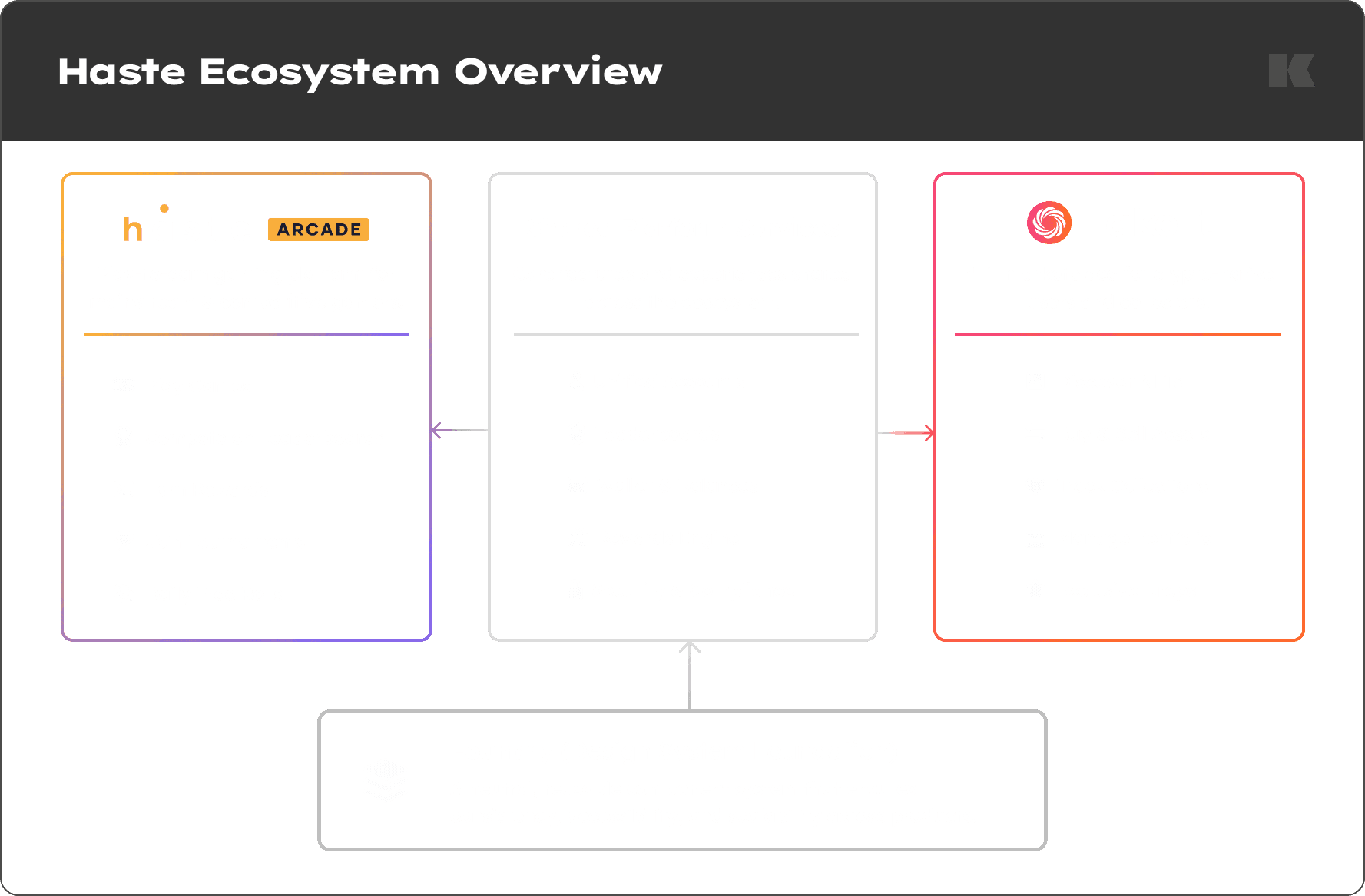
Distinct product experiences connected by a shared design foundation.
Building a Shared Foundation
I built Haste’s first design system to give the growing product ecosystem a consistent, reusable framework. Shared styles, components, and interaction patterns allowed each product to evolve independently while maintaining a cohesive Haste experience.
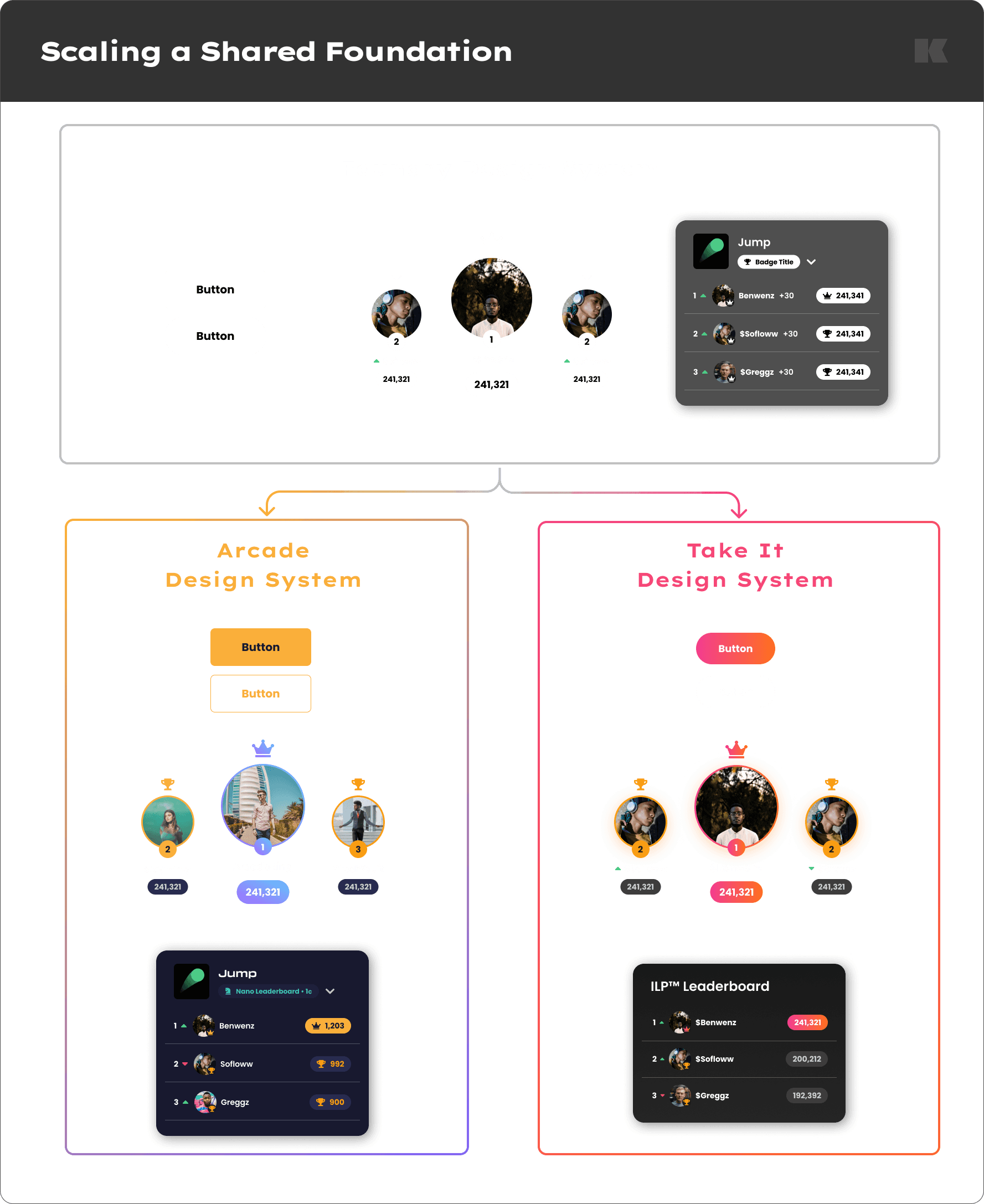
A shared design foundation supported distinct product experiences across the Haste ecosystem.
Designing for Trust & Comprehension
Because Haste introduced unfamiliar reward mechanics and payment concepts, reducing uncertainty became a core design principle. I focused on communicating value first, reducing friction before gameplay, and introducing complexity only when it became relevant.
1 — Clarify the value proposition
Lead with the experience, not the technology. I shifted messaging away from blockchain mechanics and toward the immediate player value: play games, compete, and earn rewards.
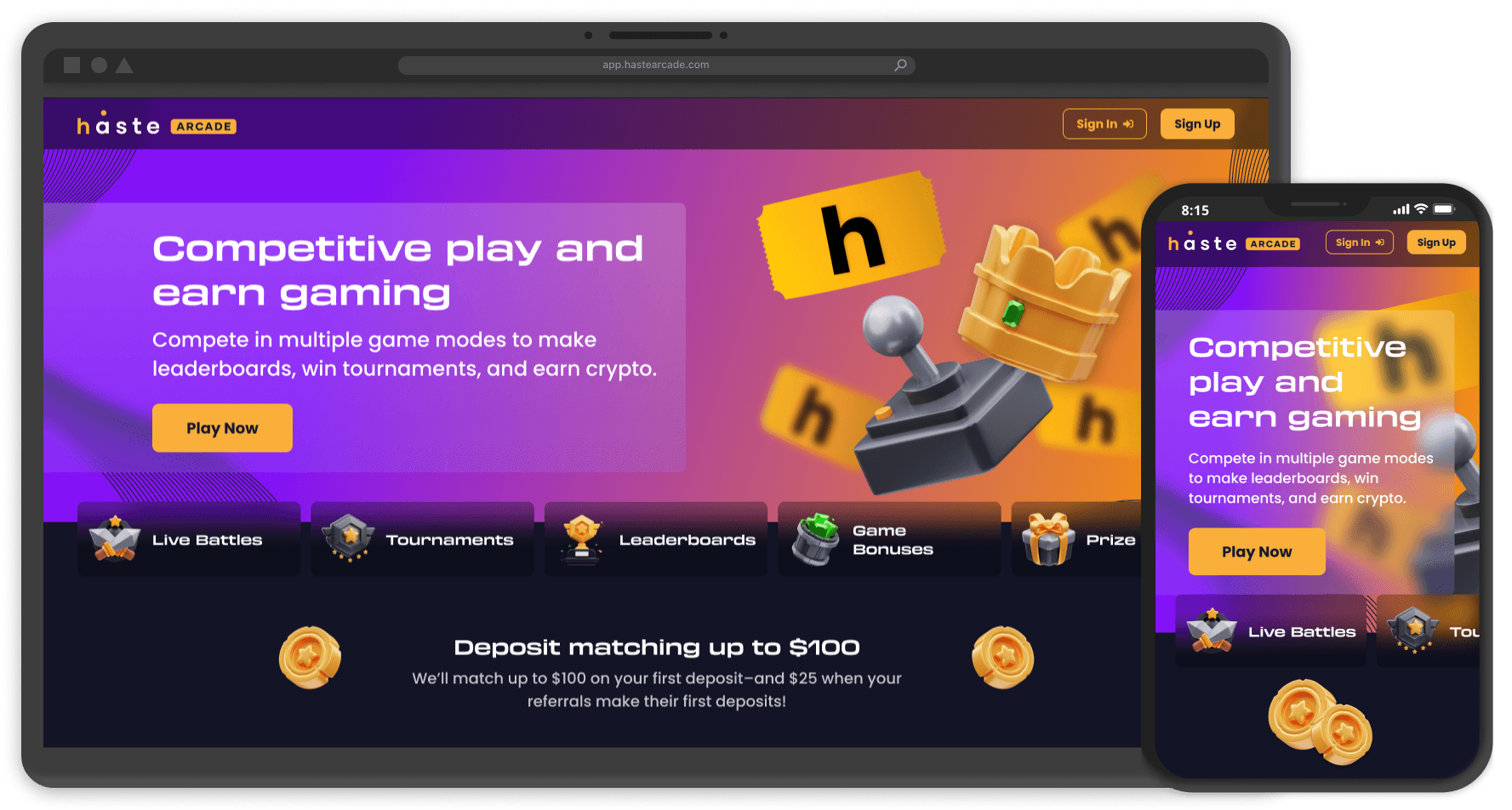
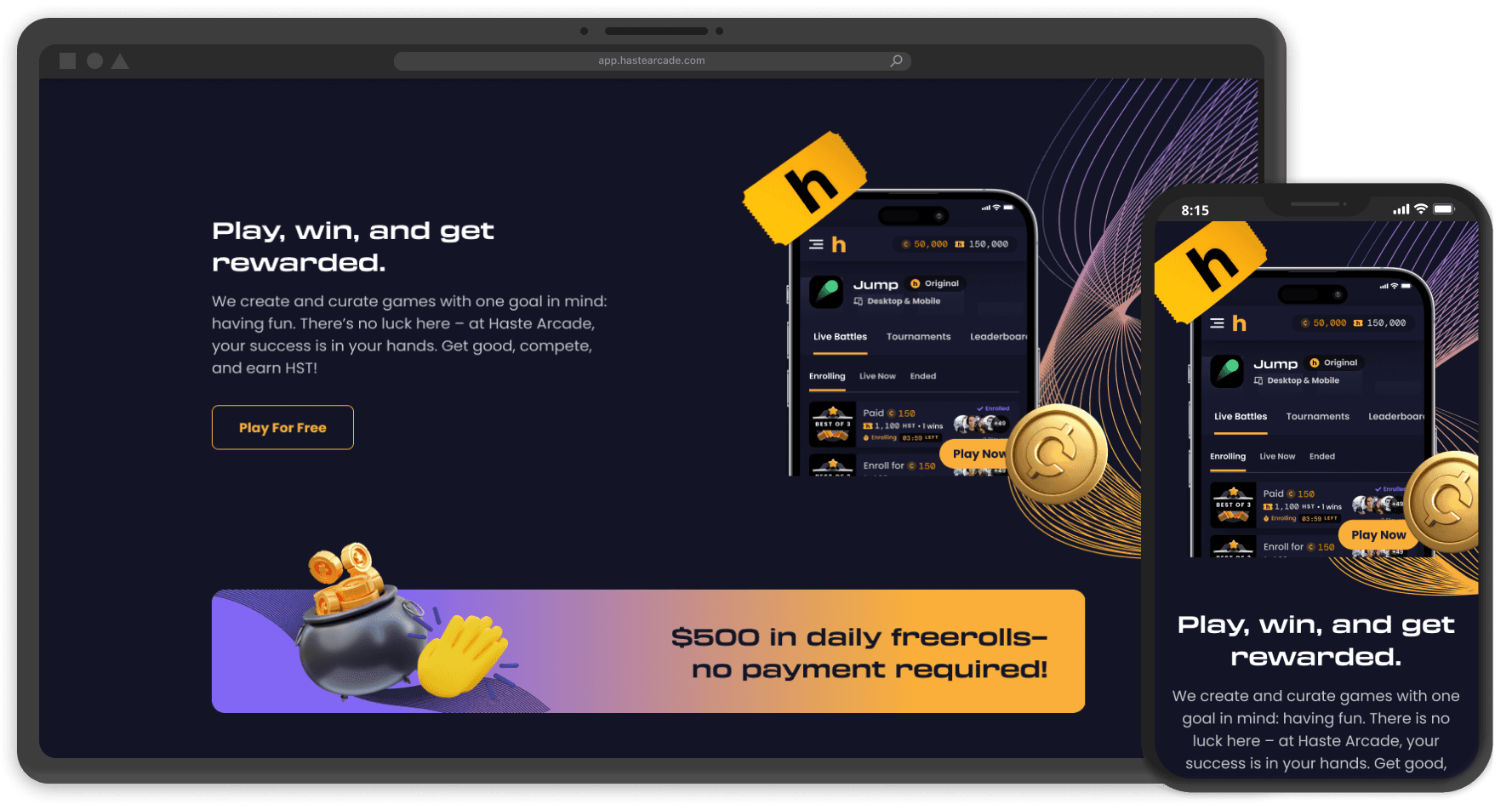
Homepage redesign focused on clarifying the value proposition, communicating legitimacy, and reducing perceived risk for first-time users.
2 — Let players experience value sooner
I reworked entry points so players could experience Haste’s core value before encountering more complex account, wallet, or payment requirements.
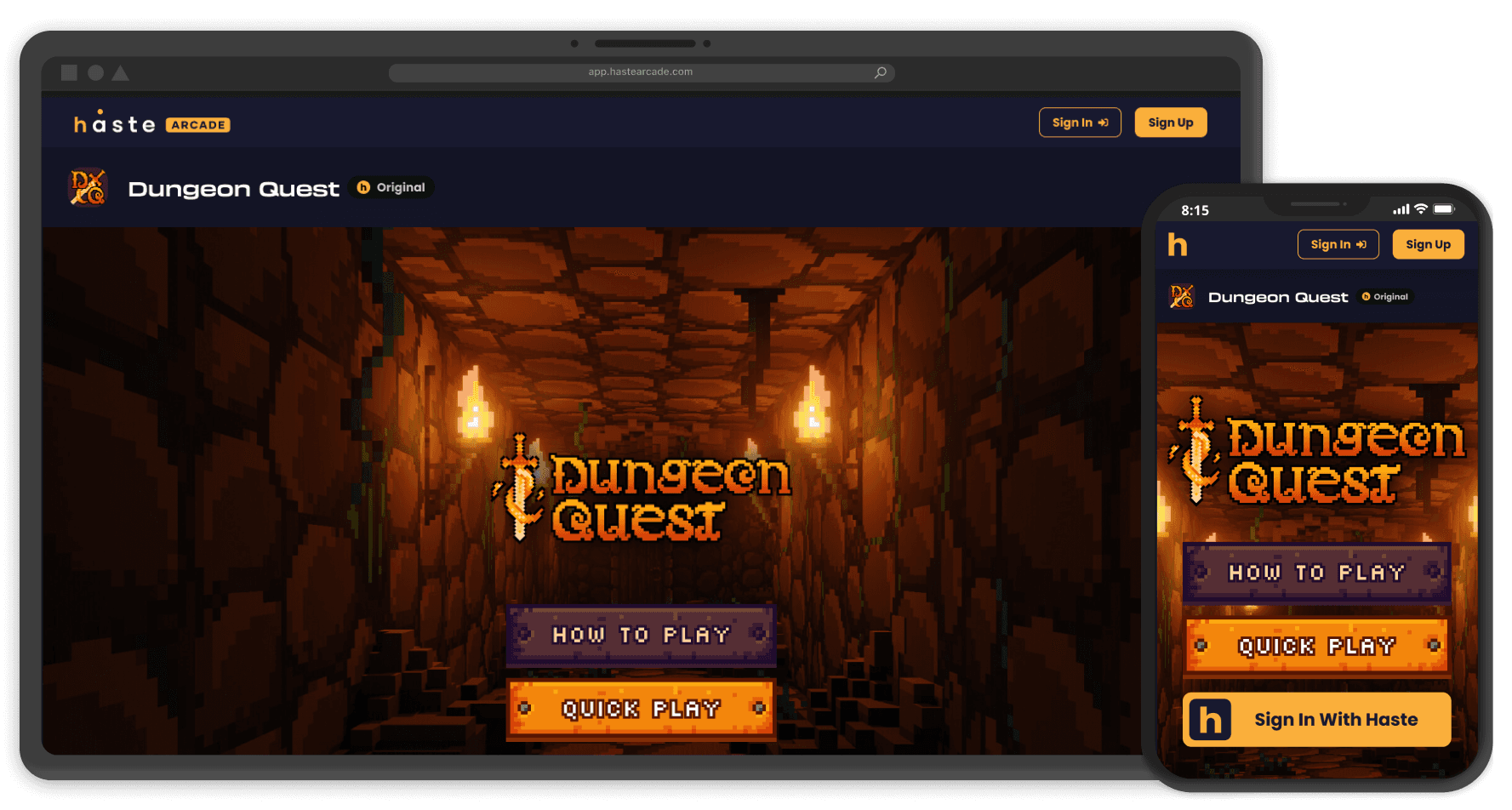
Haste Arcade Quick Play Experience
3 — Introduce complexity progressively
Rather than explaining every mechanic upfront, I surfaced guidance as it became relevant, allowing players to build their understanding through use.
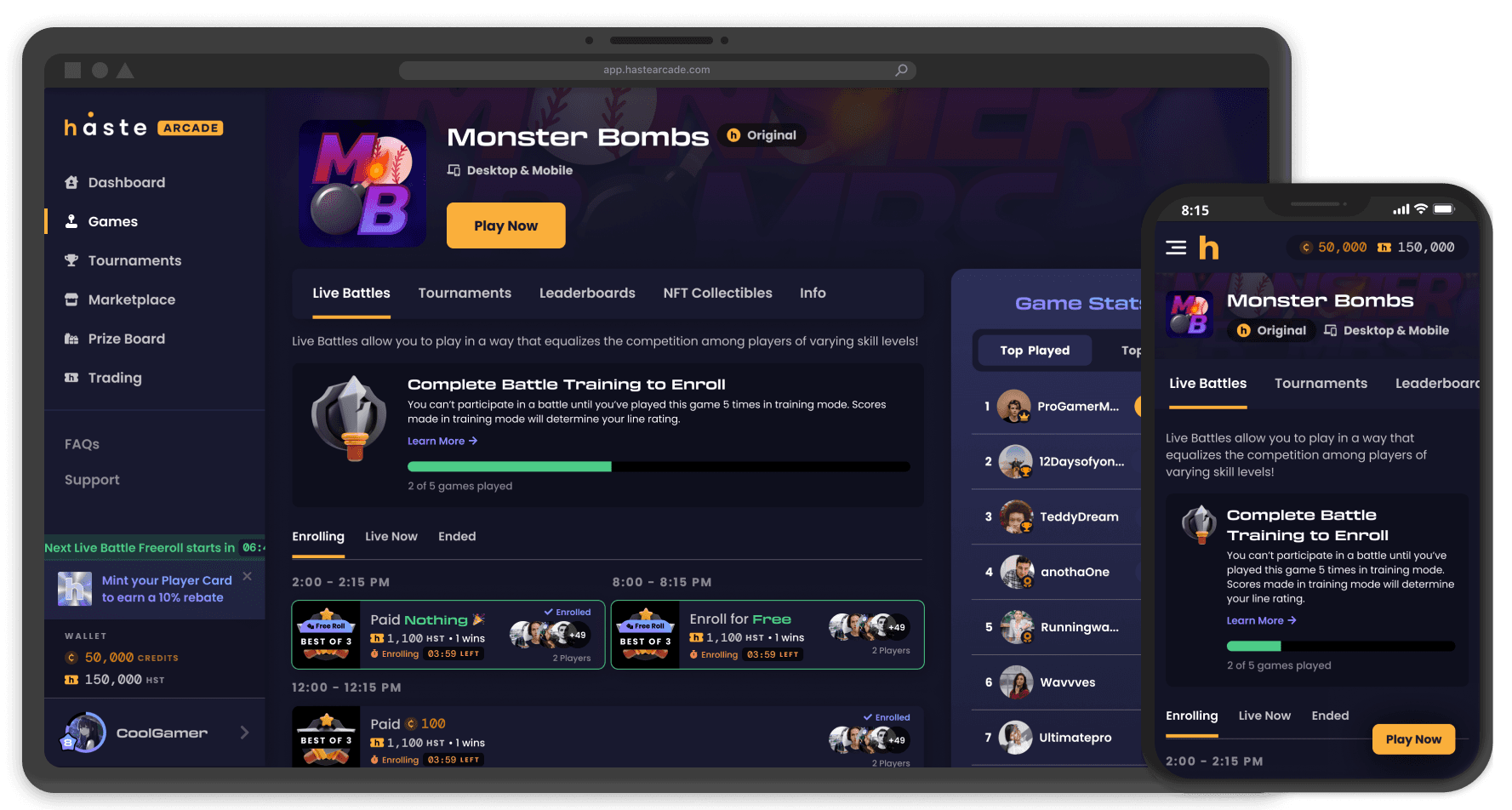
Haste Arcade Live Battle Experience
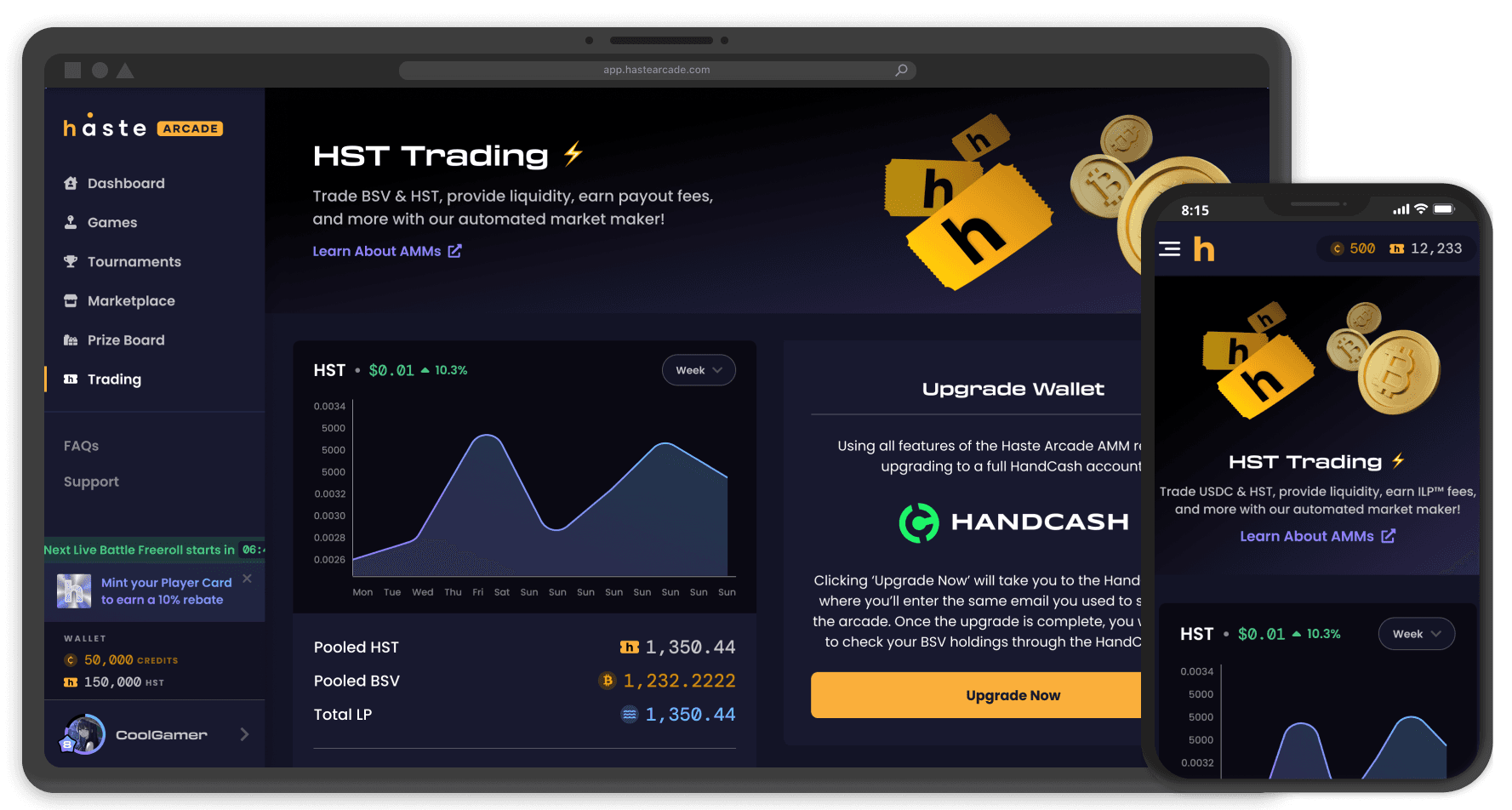
Haste Arcade Automatic Market Maker Experience
Extending the System
As the Haste ecosystem grew, new product requirements exposed gaps in the existing system. I expanded the component library and interaction patterns while preserving consistency across the broader experience.
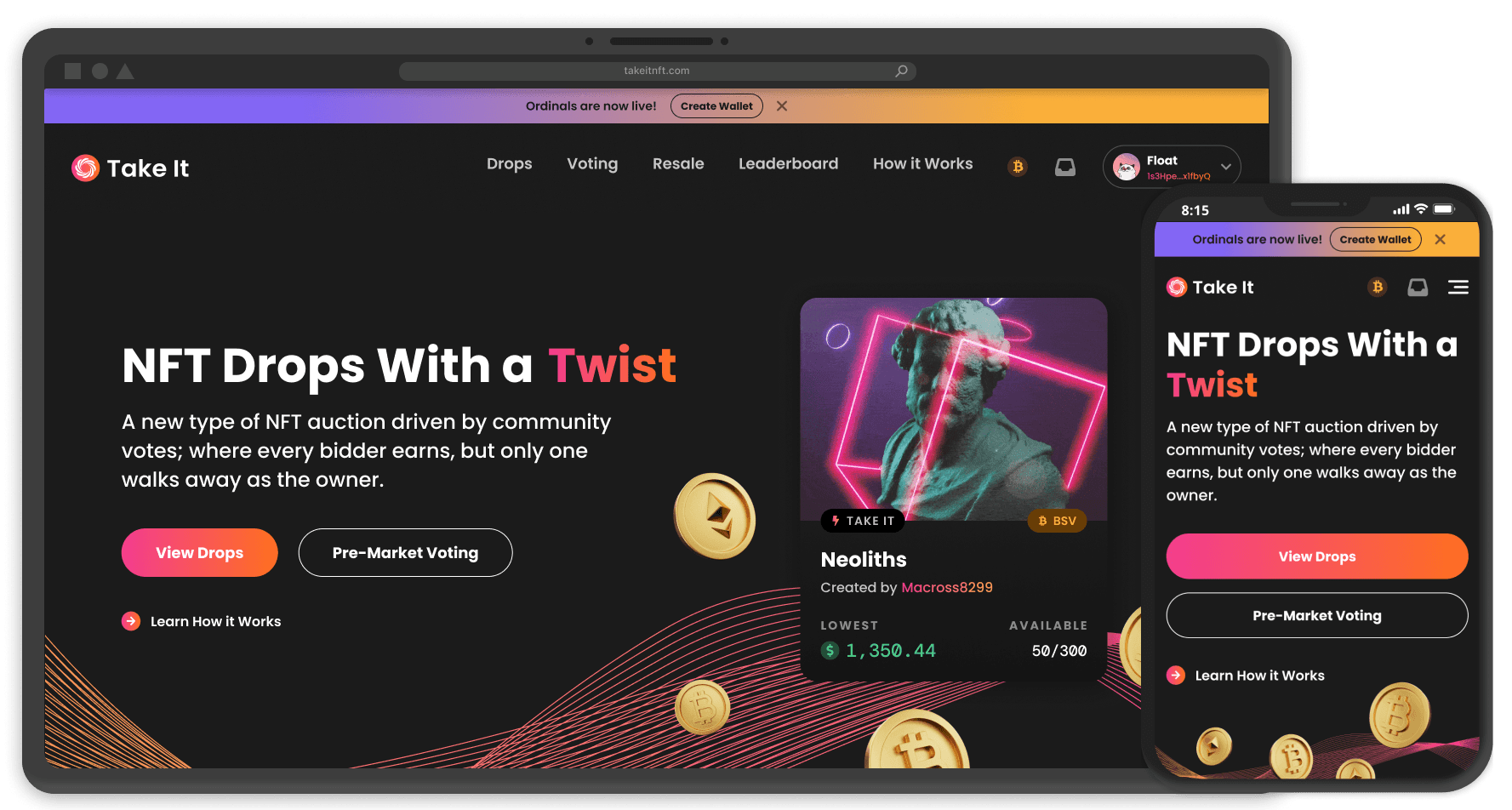
Take It Homepage
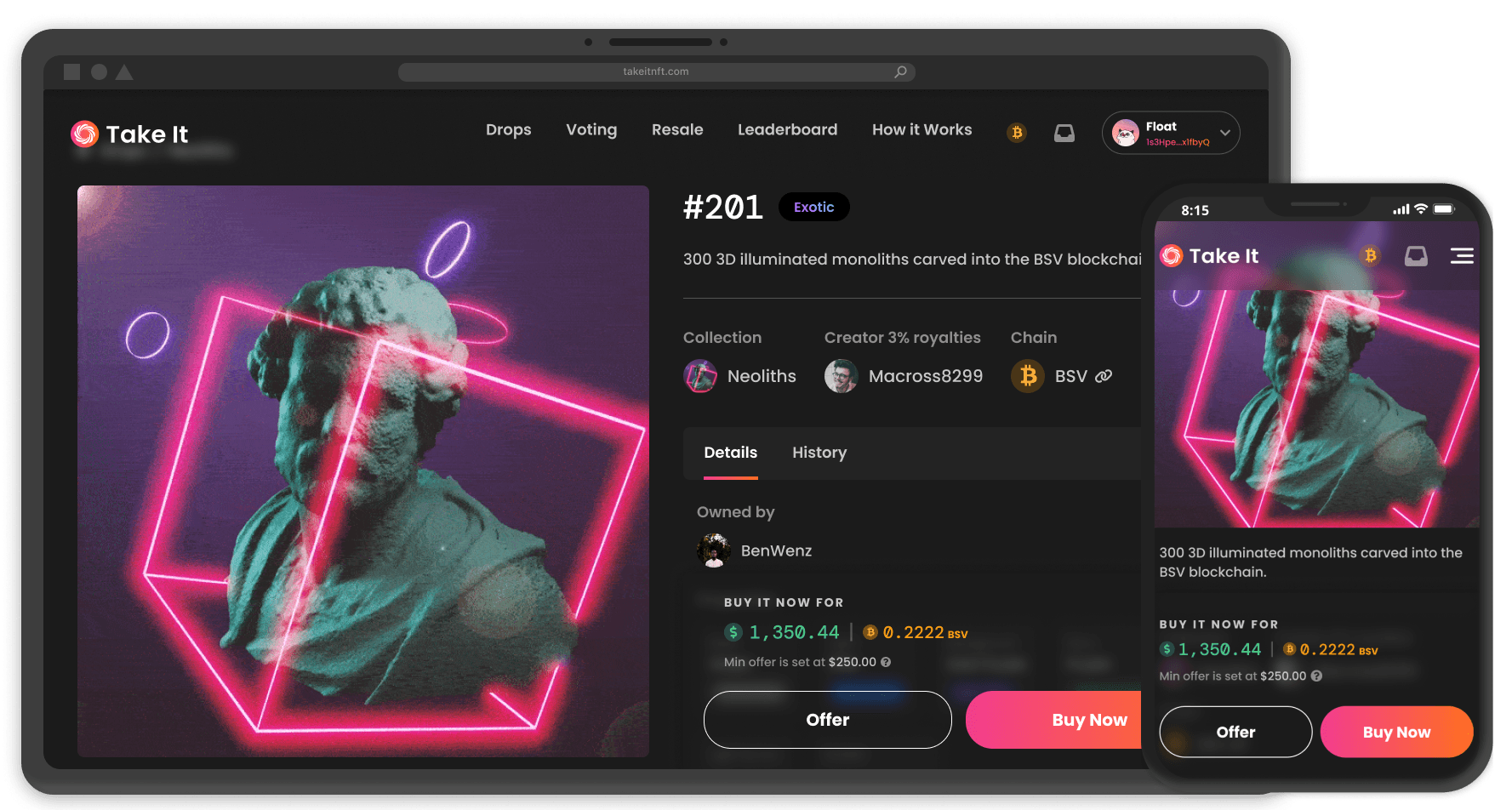
Take It NFT Detail Page
A System Across the Experience
Across both products, shared components and interaction patterns created continuity without forcing the experiences to look or behave identically.
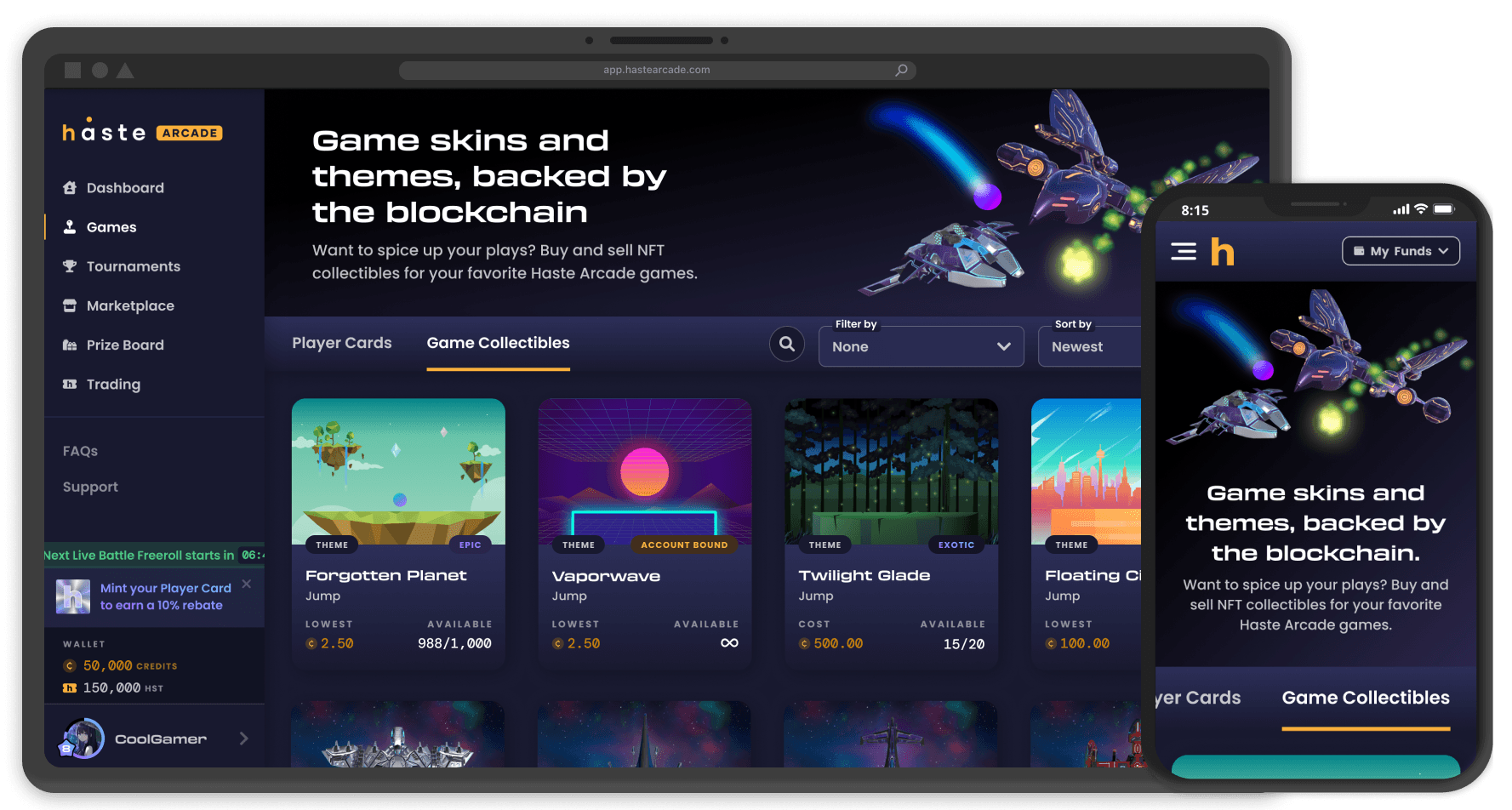
Haste Arcade — shared components and foundations applied to the core gaming experience.
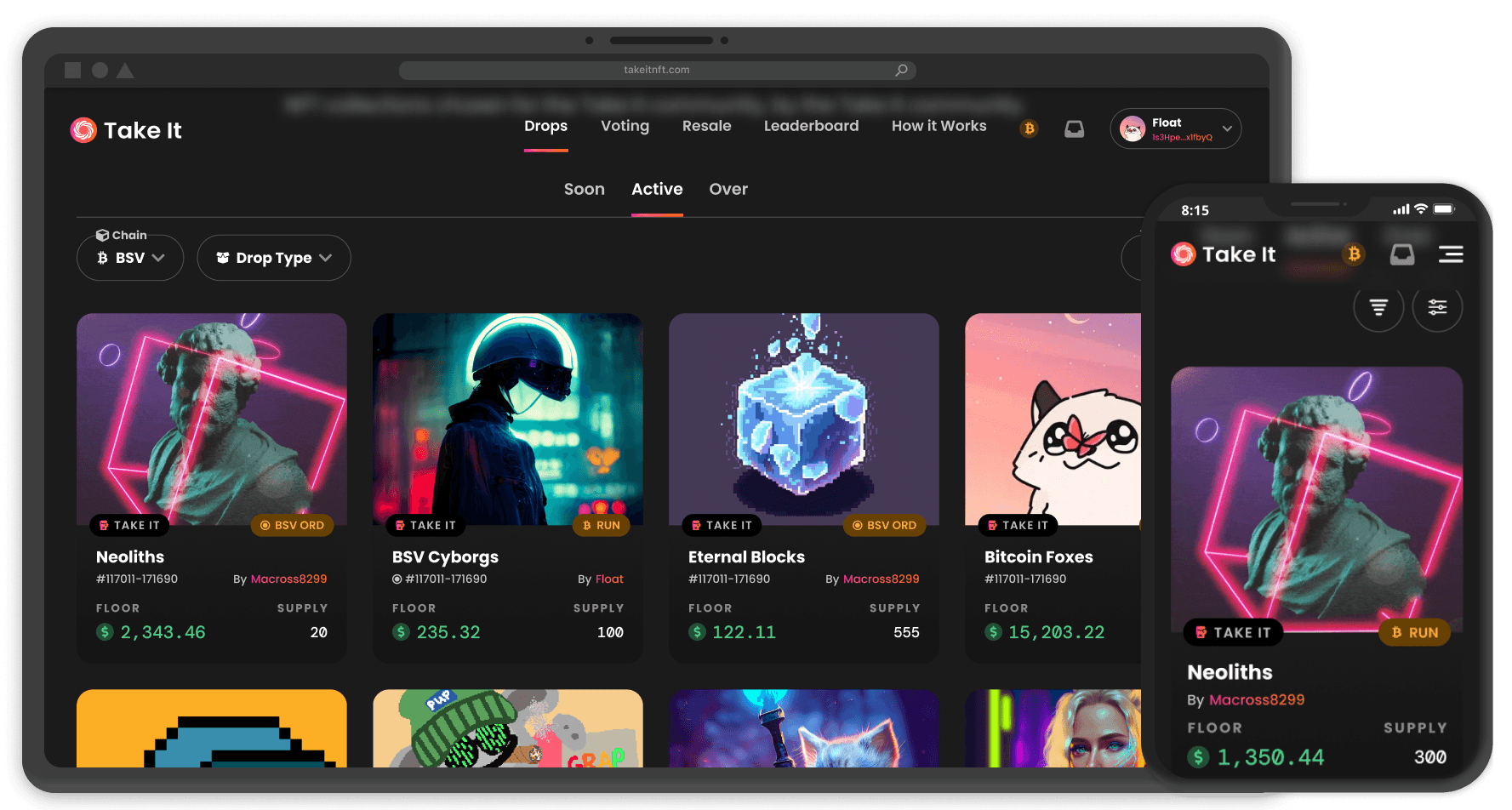
Take It — the same system adapted to a distinct product and interaction model.
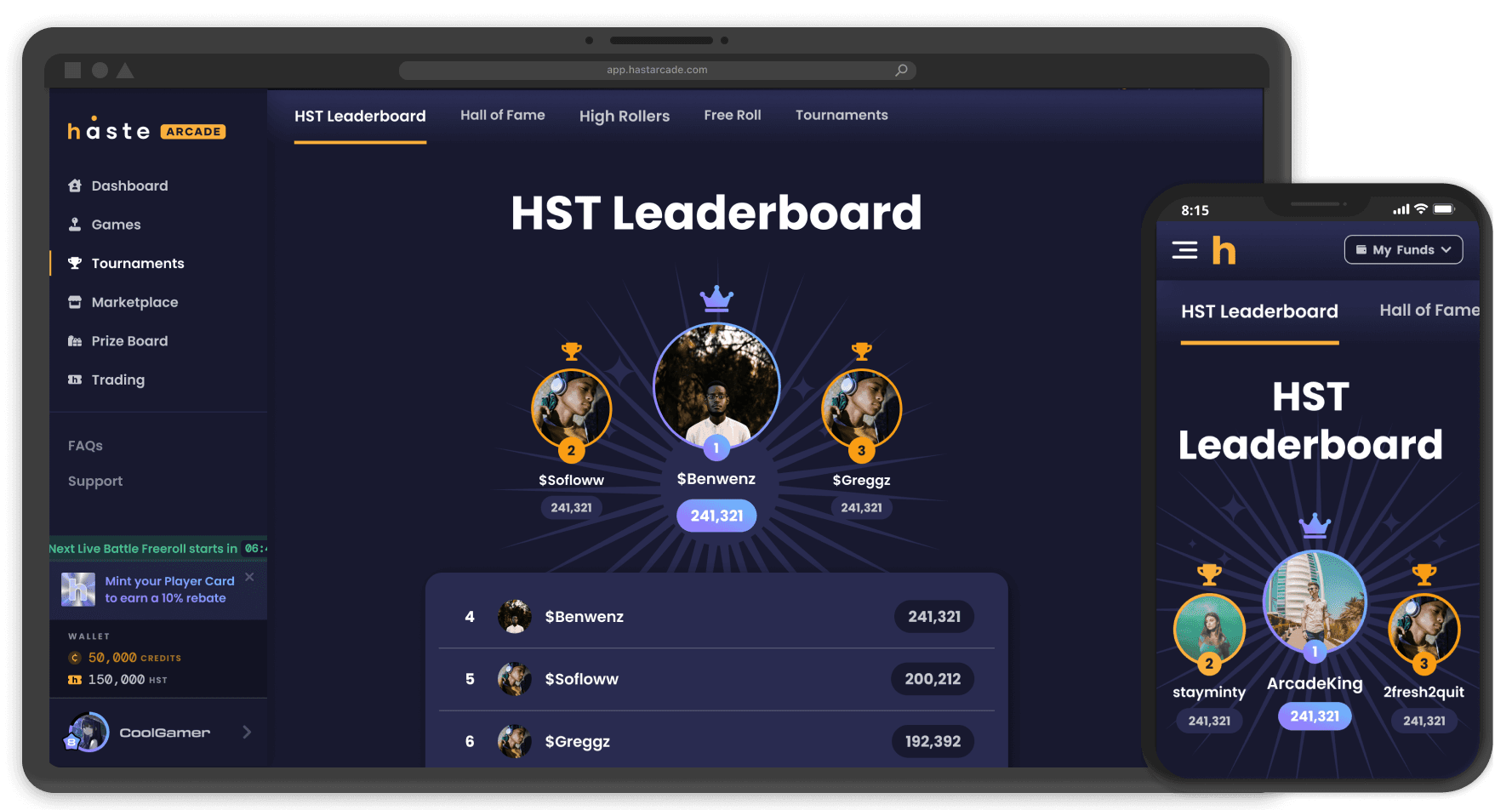
Haste Tournament Leaderboard Page
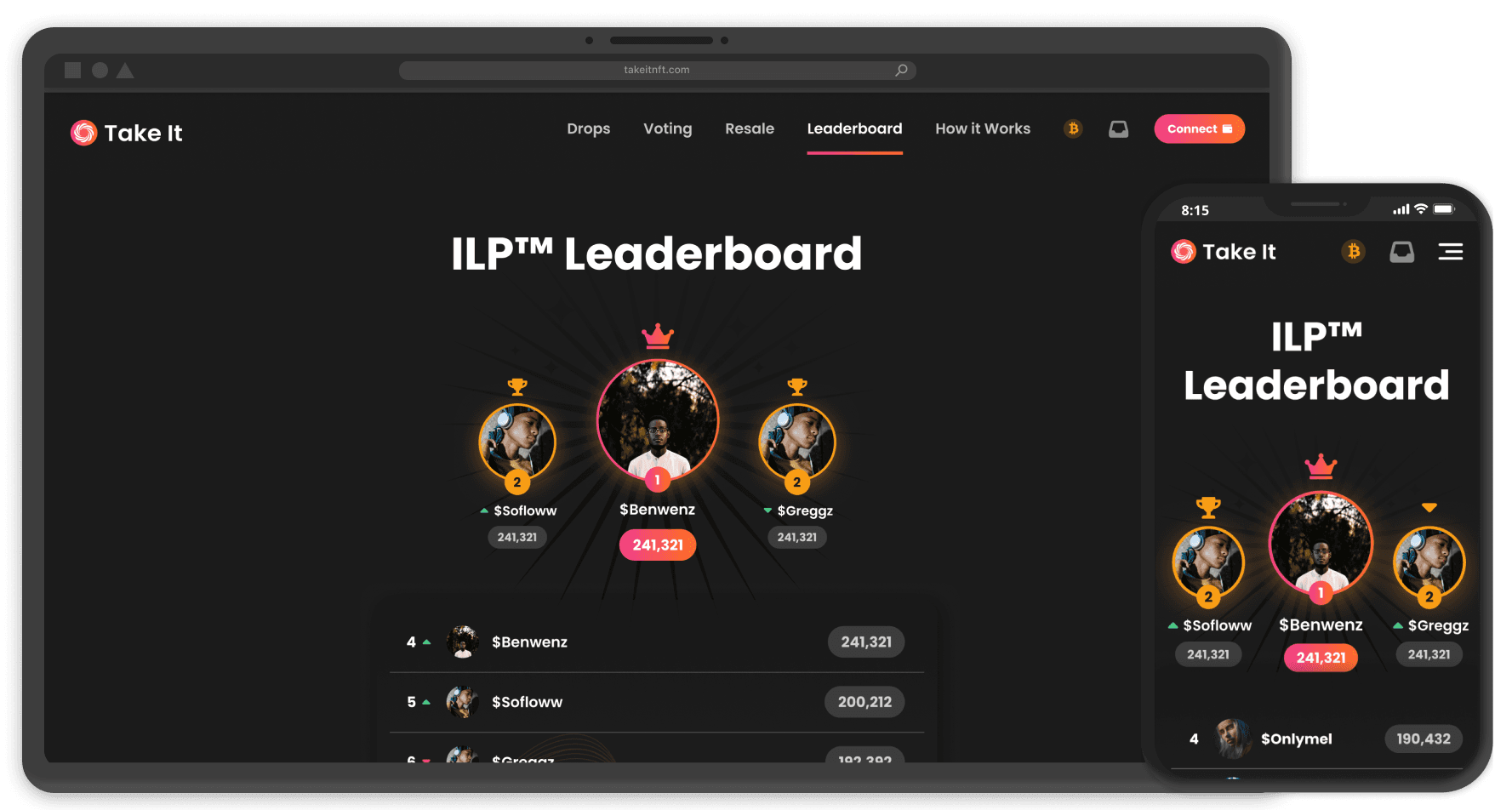
Take It ILP Leaderboard
Results & Impact
The work established a scalable foundation for Haste's growing ecosystem while reducing friction and improving adoption across the core player experience.
Metric | Impact |
|---|---|
New User Signups | +66% Increased conversion into registered players. |
Time to First Game | 25% faster Reduced friction between discovery and first gameplay. |
Freeroll Participation | +55% Increased engagement with low-barrier gameplay. |
Deposit Match Adoption | +18% Increased adoption of the deposit incentive. |
Lessons Learned
Lesson | Takeaway |
|---|---|
Value before complexity | Users didn’t need to understand the underlying technology before recognizing the product’s value. |
Teach in context | Introducing unfamiliar concepts progressively reduced the cognitive burden of onboarding. |
Build systems for change | A shared foundation allowed new products to emerge without requiring an entirely new visual and interaction language. |